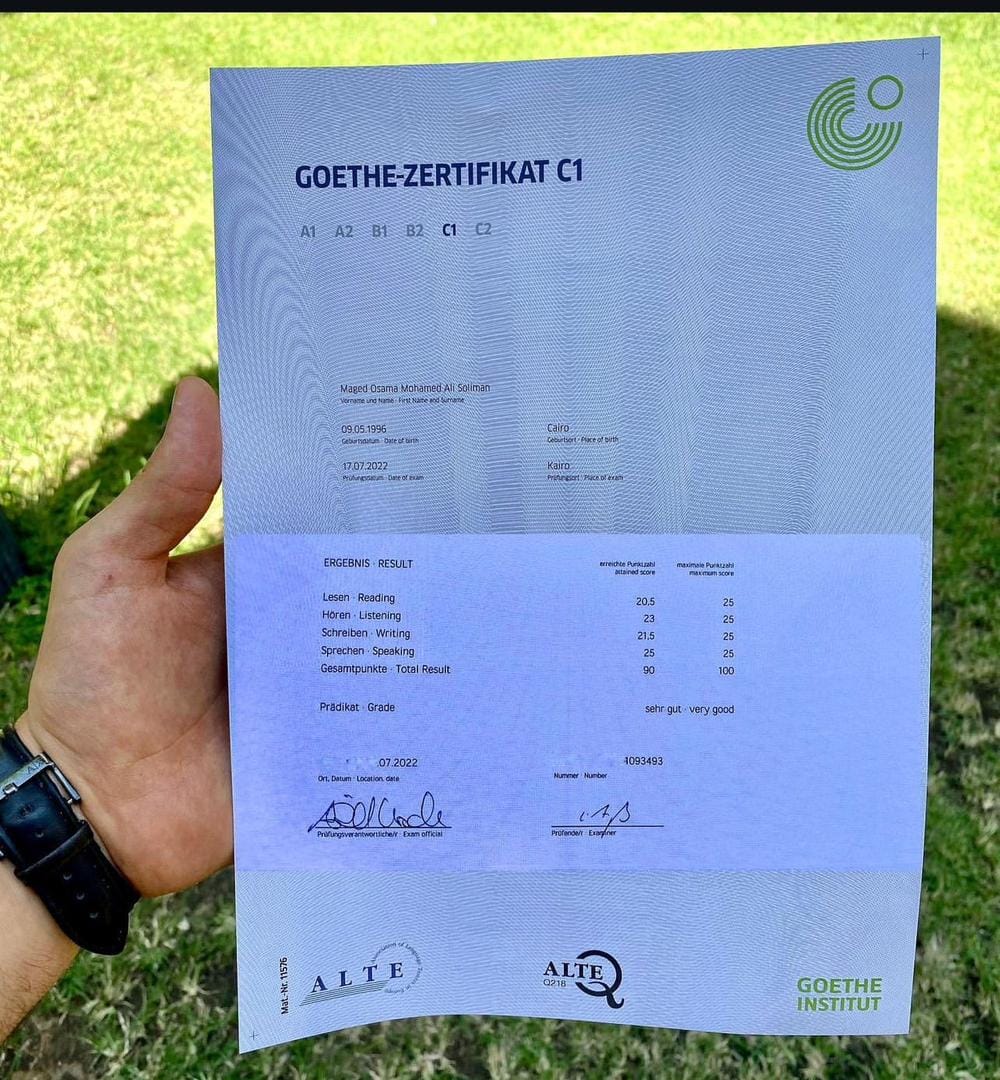
Five Killer Quora Answers To German B1 Certificate
ページ情報
投稿人 Jorja 메일보내기 이름으로 검색 (5.♡.37.155) 作成日26-02-10 09:25 閲覧数2回 コメント0件本文
Address :
LY
Understanding the German B1 Certificate: A Comprehensive Guide
The German B1 Certificate is a substantial turning point for anybody aiming to show their efficiency in the German language. This intermediate level certification belongs to the Common European Framework of Reference for Languages (CEFR) and works as an essential benchmark for those who wish to pursue further education, improve their career potential customers, or immerse themselves in German culture. This blog post presents a thorough analysis of the B1 Certificate, its structure, and its advantages, in addition to often asked questions to offer a holistic understanding of the topic.
What Is the B1 Certificate?
The B1 Certificate evaluates a prospect's capability to interact effectively in everyday contexts and manage numerous aspects of the German language. It signifies that a person can comprehend and produce familiar texts, engage in discussions worrying subjects of personal importance, and reveal viewpoints on daily matters with self-confidence.
Table 1: CEFR Language Proficiency Levels
| Proficiency Level | Description |
|---|---|
| A1 | Beginner: Can understand and utilize familiar expressions. |
| A2 | Elementary: Can interact in easy and routine tasks. |
| B1 | Intermediate: Can manage most situations while taking a trip. |
| B2 | Upper Intermediate: Can comprehend the essences of intricate texts. |
| C1 | Advanced: Can produce clear, well-structured text on complex subjects. |
| C2 | Mastery: Can quickly understand virtually whatever heard or read. |
Structure of the B1 Examination
The B1 Certificate typically makes up 4 parts: Listening, Reading, Writing, and Speaking. Each section evaluates various linguistic abilities and is designed to ensure that prospects can use German effectively in various circumstances.
Table 2: B1 Examination Structure
| Component | Period | Jobs Included | Abilities Assessed |
|---|---|---|---|
| Listening | Thirty minutes | Understand conversations and monologues. | Listening understanding, detail understanding. |
| Checking out | Thirty minutes | Read texts, posts, and signs. | Skimming, scanning, comprehending main points. |
| Writing | 60 minutes | Write letters, e-mails, and brief essays. | Composing structure, coherence, grammar accuracy. |
| Speaking | 15 minutes | Engage in conversations and conversations. | Fluency, pronunciation, interaction skills. |
Secret Features of Each Component
Listening: Candidates listen to discussions or recordings and respond to related questions. This evaluates their ability to understand spoken German in various contexts, such as conversations or announcements.
Checking out: Participants check out a range of texts, including instructions, posts, or messages, and address questions to identify their understanding of the content.
Writing: In this area, candidates are required to produce written texts, which might include individual letters or essays on familiar subjects.
Speaking: The speaking test normally includes a discussion with an inspector and can include the presentation of personal opinions on numerous topics.
Benefits of Obtaining a B1 Certificate
Acquiring a B1 Certificate - Https://Www.Wernermelamed.Top/Education/The-Goethe-Zertifikat-B2-Navigating-German-Language-Proficiency - can considerably benefit people in multiple ways. Below is a list of the most significant advantages.
List of Benefits:
Educational Opportunities: Many universities and colleges in German-speaking nations require a B1 level of proficiency for admission to particular programs, especially those taught in German.
Profession Advancement: For specialists working in worldwide businesses or those preparing to move to Germany, a B1 Certificate can enhance task prospects and provide opportunities for promotion.
Cultural Integration: Holding a B1 Certificate allows people to immerse themselves more completely in German culture, making it possible for much better understanding of social dynamics, traditions, and customizeds.
Language Travel: Many language schools and exchange programs in Germany and other German-speaking countries mandate a B1 level for registration, making it a required stepping stone for those interested in language trips.
International Recognition: The German B1 Certificate is worldwide recognized, which can include to the resume and increase chances in many countries.
Preparing for the B1 Examination
Preparation for the B1 Certificate can be approached through different means. Here are some strategies to succeed:
List of Preparation Strategies:
Enroll in a Language Course: Look for language schools or online platforms that provide courses specifically tailored for the B1 level.
Experiment Online Resources: Websites, apps, and initiation texts can offer outstanding practice materials.
Take Part in Language Exchanges: Connect with native German speakers to practice conversation and fluency.
Utilize Study Materials: Invest in books and exam preparation guides specifically designed for the B1 assessment.
Mock Exams: Regularly take mock exams to familiarize oneself with the test format and time management.
Often Asked Questions (FAQ)
1. What is the credibility of the B1 Certificate?
The B1 Certificate does not end, but it's suggested to stay up to date with language practice to maintain efficiency.
2. Where can I take the B1 assessment?
Assessments are used by different organizations, consisting of the Goethe-Institut, telc, and TestDaF. It's best to talk to local language schools for schedule.
3. The length of time does it require to get ready for the B1 Certificate?
Preparation time differs depending upon specific language abilities. Usually, 200-300 hours of research study are advised to prepare effectively.
4. Can I take the B1 exam online?
Some organizations provide online assessments. For that reason, consulting the picked institution regarding its format is suggested.
5. Are there any age requirements to take the B1 exam?
No, there are no specific age requirements. Both grownups and kids can take the exam, offered they fulfill the language proficiency level.
The German B1 Certificate is a crucial step for those intending to improve their language abilities and engage more deeply with the German-speaking world. By comprehending the structure of the examination, preparing successfully, and acknowledging the advantages of attaining this accreditation, prospects can navigate their courses towards individual and expert improvement with greater self-confidence. Whether for academic purposes or cultural mastery, the B1 Certificate acts as a critical achievement in one's linguistic journey.